
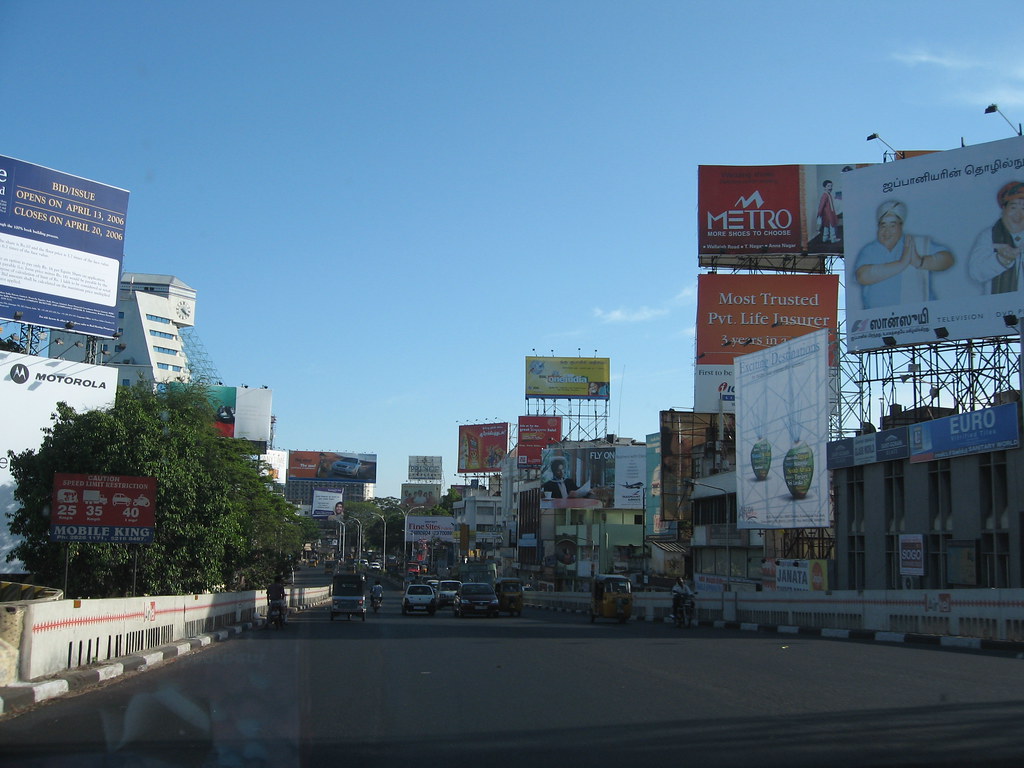
The large format print market is growing steadily rather than
explosively. Most analysts put it at roughly $10.4 billion in
2026, with forecasts ranging from around 3% to nearly 6% annual
growth to the end of the decade. Beneath those figures, though,
how and what we print is changing fast. Here are the
trends we’re seeing, and what they mean if you buy print.
1.
Sustainability moves from “nice to have” to expected
Brands are under pressure to show their marketing materials aren’t
adding to landfill. In large format, that’s showing up as:
- Water-based, latex and UV-LED inks, which produce
fewer volatile organic compounds (VOCs) than traditional solvent
inks - Recyclable and recycled substrates, from
paper-based display boards to recyclable fabrics - Questions about end of life: buyers increasingly
ask what happens to a banner after the campaign
What it means for you: Ask your printer about
lower-impact material options early. They don’t always cost more, and
they can support your own ESG reporting.
2. The shift away from PVC
PVC has been the workhorse of banners and signage for decades, but
stricter environmental expectations around VOCs and plastics are pushing
the industry toward PVC-free media. Alternatives
include polyester fabrics, PET-based films and paper-based rigid
boards.
What it means for you: PVC still has a place for
heavy-duty outdoor use, but for many indoor and short-term applications
there’s now a credible greener alternative.
3. Short runs and
personalisation
Industry sources suggest that more than half of wide format
revenue now comes from short-run, custom projects. Retailers
want store-specific displays, events want one-off graphics, and digital
print makes runs of one economical.
What it means for you: You don’t need to order
hundreds of identical posters to get good value. Versioning by location,
audience or language is realistic and affordable.
4. Experiential and
immersive print
Floor graphics, wall murals, window takeovers, printed textiles and
3D displays are blurring the line between print and environment. Retail,
hospitality and events are using large format to create spaces people
want to photograph and share.
What it means for you: Think beyond the poster. Ask
how print could transform a whole space.
5. Textiles and soft signage
Fabric graphics, especially dye-sublimation prints in tension frames
and lightboxes, keep gaining ground. They’re lightweight,
crease-resistant, easy to ship and often more sustainable than rigid
alternatives.
6. Hybrid and flatbed
versatility
Print providers are investing in hybrid roll-to-roll and
flatbed systems, often with UV-curable inks, that can print
directly onto boards, acrylic, wood, glass and more. That cuts out
mounting steps and opens up new creative possibilities.
What it means for you: Direct-to-substrate printing
can mean faster turnaround and cleaner finishes on rigid signage and
premium displays.
7. Construction and
architecture
In construction, large format is evolving from simple plan printing
to hoarding graphics, site branding and building wraps.
There’s also growing talk of print workflows linking directly to BIM
design models.
The bottom line
Large format print is getting greener, more personal and more
ambitious. For buyers, that means more choice and better value. The
printers worth working with are the ones who’ll guide you through those
options.
At Superchrome, we’re happy to talk through which materials and
techniques suit your project, including lower-impact alternatives. [Get
in touch — add link]
Sources: LexJet
– Wide-Format Print Industry Trends for 2026 · Research
and Markets – Large Format Printers Market Report 2026 · Technavio
– Large Format Printers Market 2026–2030 · Craftsmen
Industries – Large Format Printing Trends · PrintBig
UK – Trends 2026 · Red
Knight Repro – Future of Large Format Printing
Featured image: Billboards by bunnicula, BY-ND 2.0.