
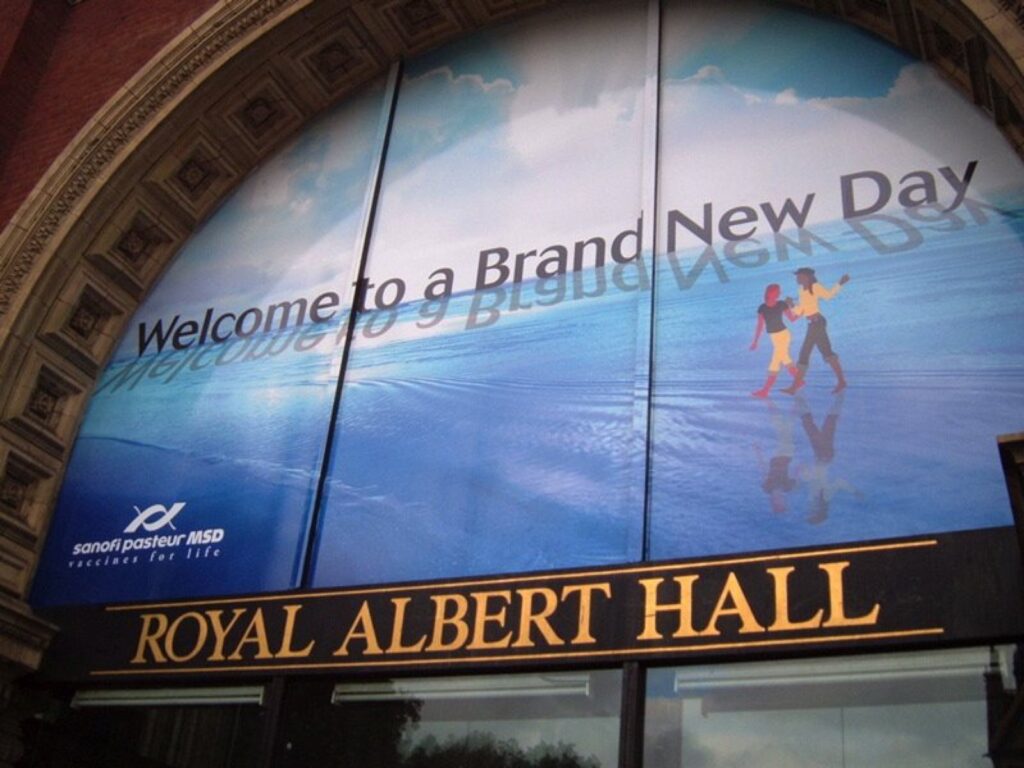
When you order a print, the most important thing to tell us is where it is going. Indoor and outdoor work are made differently, and we run separate printers for each. A paper poster that will look sharp for years in a corridor might last days on a fence in the rain. A heavy outdoor banner might be needlessly stiff and shiny in a gallery. Matching the print to the place is the single biggest factor in how long it lasts.
What attacks a print outdoors
- Sunlight. Ultraviolet light breaks down pigments and causes fading, especially reds and yellows.
- Water. Rain and condensation ruin paper, can lift edges of vinyl, and get into poorly finished seams and holes.
- Wind. Solid banners act like sails. Wind loads fixings, tears eyelets and flaps material until it fails.
- Temperature. Heat and cold make some materials expand, contract or bow.
- Dirt, scratches and people. Pollution, abrasion, graffiti and handling all take their toll at street level.
How outdoor prints are made to cope
Inks. Outdoor work is printed with UV-resistant inks, which hold their colour in daylight far longer than standard indoor inks.
Materials. Vinyl and PVC are the usual choice outside. PVC banners are waterproof and tough; mesh lets wind through on exposed sites; external-grade self-adhesive vinyl is used on windows, vehicles and signs; Dibond and other rigid boards stay flat and stable. Blue-back poster paper is made for pasting onto hoardings and billboards.
Protection. Outdoor prints can be sealed or laminated against weather and scratches. Lamination adds a clear protective layer and can include extra UV protection.
Finishing and fixing. Reinforced hems, properly spaced eyelets and the right fixings matter as much as the print. See how to hang a banner.
What works best indoors
Indoors, you can choose materials for their look rather than their toughness. Photo papers in matt, satin and gloss give excellent detail; satin photo paper is an economical, fingerprint-resistant option for displays and presentations. Fabric gives a soft, glare-free finish under lights. Canvas and fine art papers suit interiors and galleries. Foamex and other light boards are easy to hang and move.
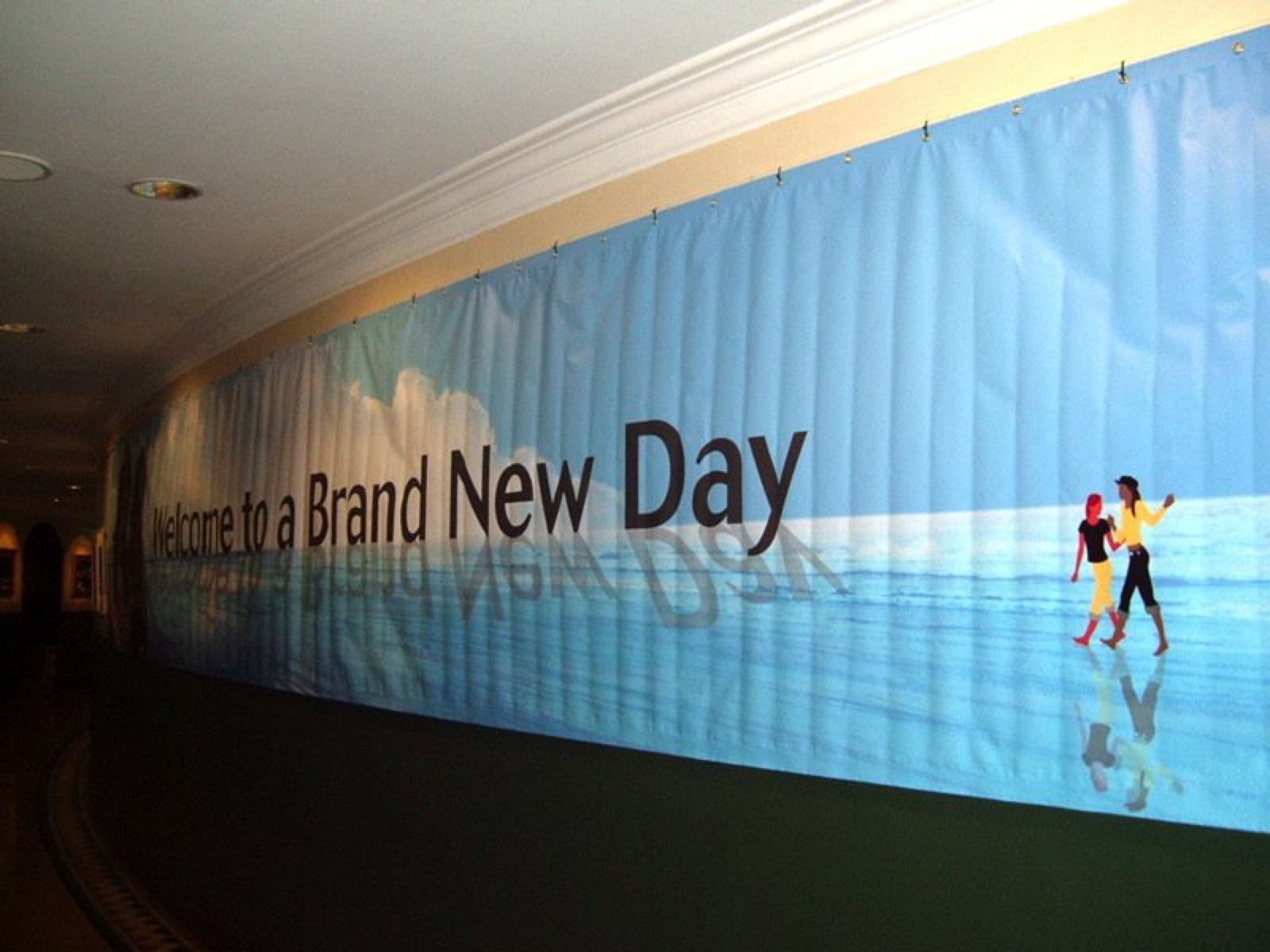
Indoor prints still have enemies: direct sun through windows, heat from radiators and lights, humidity, and hands. A print in a sunny shop window or atrium is effectively outdoors as far as fading is concerned. Laminating protects prints that will be touched or wiped.
The in-between cases
- Shop windows. Graphics applied inside the glass avoid rain and vandalism but still face strong sun. External-grade media and UV inks are worth using. See window vinyl options.
- Covered outdoor spaces. Station concourses, porches and marquees are sheltered from rain but not from light, cold or damp.
- Short-term outdoor events. A one-day event may not need the most durable spec. Tell us how long the print needs to last.
- Lightboxes outside. Backlit prints need materials suited to both the light behind and the weather in front.
How long will an outdoor print last?
That depends on the material, the finishing, the orientation (a south-facing wall gets far more sun), the exposure to wind and how it is fixed. We cannot give a single figure that holds for every site, so tell us how long you need it to last and we will specify accordingly.
What to tell us
- Indoors or outdoors, and if outdoors, how exposed
- Which way it faces, if you know
- How long it needs to last
- Whether people will touch it or walk on it
- How it will be fixed
With that, we can recommend inks, material and protection. See also large format printing, banner printing and reflective signs for signs that need to be seen at night.
A quick example
Take a single campaign image used in three places. In the reception area it might be a satin photo print mounted on Foamex: sharp, light and easy to hang. On the shop window it becomes external-grade self-adhesive vinyl printed with UV inks, because the sun through the glass will fade anything less. On the railings outside, it is a PVC banner, hemmed and eyeleted, or mesh if the spot is exposed. Same artwork, three different specifications, each made for where it will live.
Next step
When you request a quote, tell us where each item will go and how long it needs to last. If your artwork is ready, upload it and we will check it against the material we recommend.
Questions
Can I use a paper poster outside?
Standard paper posters are for indoor use. For outdoor posters we print on blue-back paper for hoardings and billboards, and posters can be sealed for extra protection. For longer outdoor use, vinyl or PVC is usually better.
Do outdoor prints need laminating?
Not always, but laminating or sealing protects against weather, scratches and UV and extends the life of outdoor work. We will recommend it where it is worth having.
Will my print fade?
All prints fade eventually in strong light. UV-resistant inks and lamination slow this considerably. Tell us where it will be shown and for how long.
Are window graphics indoor or outdoor prints?
They need outdoor-grade treatment for fading because of the sun through the glass. For exterior windows we use external-grade media and UV inks.
Request a quote · Send artwork · 0203 026 0636