
Lenticular printing
Prints that change from one image to another as you move past them.
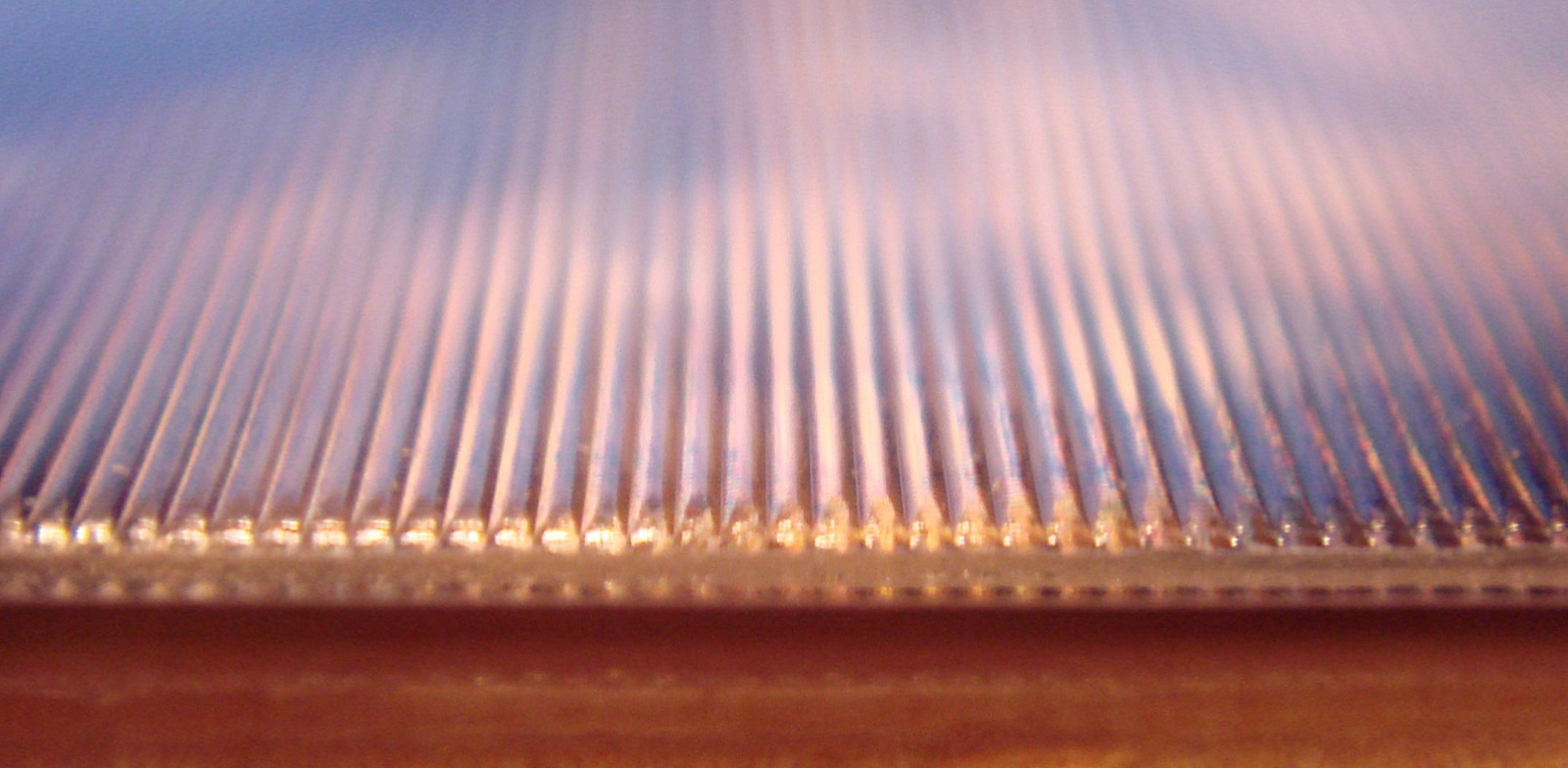
A lenticular print is an image behind a sheet of tiny parallel lenses. Two or more pictures are cut into thin strips and interlaced, and the lenses show you one set of strips from one angle and the other set from another. Walk past, and the picture flips.
It is an effect people stop for. In a window or on an exhibition wall, a lenticular gives you two messages in the space of one, and the movement draws the eye in a way a static print cannot.
What we produce
We make two-way flip lenticulars, alongside our other special-effect work such as Translites, view-through window graphics and frosted vinyl. A flip shows one image, then a second, as the viewer moves. If you are thinking of a more complex effect, such as depth or a short animation, describe it to us and we will tell you what is possible for your size and use.
Good ideas for a flip
- Before and after: a room before and after a refit, a product before and after use.
- Question and answer: a question on one view, the answer on the other.
- Two languages: the same message in two languages for a visitor attraction.
- Then and now: a historic photograph that flips to the same view today, for museums and heritage displays.
- Two products: a range shown in two colours or two seasons.
Where lenticulars work best
The effect depends on the viewer moving, so place lenticulars where people walk past rather than stand still: shop windows, corridors, stairways, exhibition routes and station concourses. Lighting matters too. The lens surface is glossy, so avoid positions where a spotlight or window will glare across it.
Lenticulars can also be lit from behind. If you want a lenticular in a lightbox, tell us at the start, as it changes how the piece is made. See backlit prints.
Designing a flip image
Lenticular artwork needs more thought than a normal print. Some guidance:
- Keep the two images different enough. The effect is strongest when the change is obvious: a change of colour, subject or text.
- Expect a little ghosting. At some angles you may see a faint trace of the other image. Bold images with strong contrast hide it better than subtle ones.
- Do not rely on small text. Fine lettering is hard to read through the lens. Keep text large, and if wording must be read at all angles, put it in the same place on both images.
- Supply both images separately. Send each image as its own file at the same size, plus a note of which should appear first.
Our designers can help develop the two images if you have an idea but not the artwork.
Talk to us first
Lenticulars are made to suit the size, the viewing distance and the direction people will be moving. Before you finalise artwork, tell us where the piece will go, its size and how many you need. Then request a quote or send your images.
Questions
Which way should the flip run?
That depends on whether people walk past the piece or approach it, and on its position. Tell us how it will be viewed and we will advise.
Can a lenticular show more than two images?
We produce two-way flips. If you have a more complex effect in mind, ask us about it.
Can lenticulars be large?
Tell us the size you are thinking of and the viewing distance, and we will tell you what is possible.
What files do I send?
Each image as a separate high-resolution file at the same size, with a note of which comes first.
Tell us what you need printed
Give us the size, the material and the date you need it. We will check your files and send a quote.
0203 026 0636