
Hoarding graphics
Printed graphics for construction hoardings, shopfront refits and development sites, turning a plain timber screen into an advert.
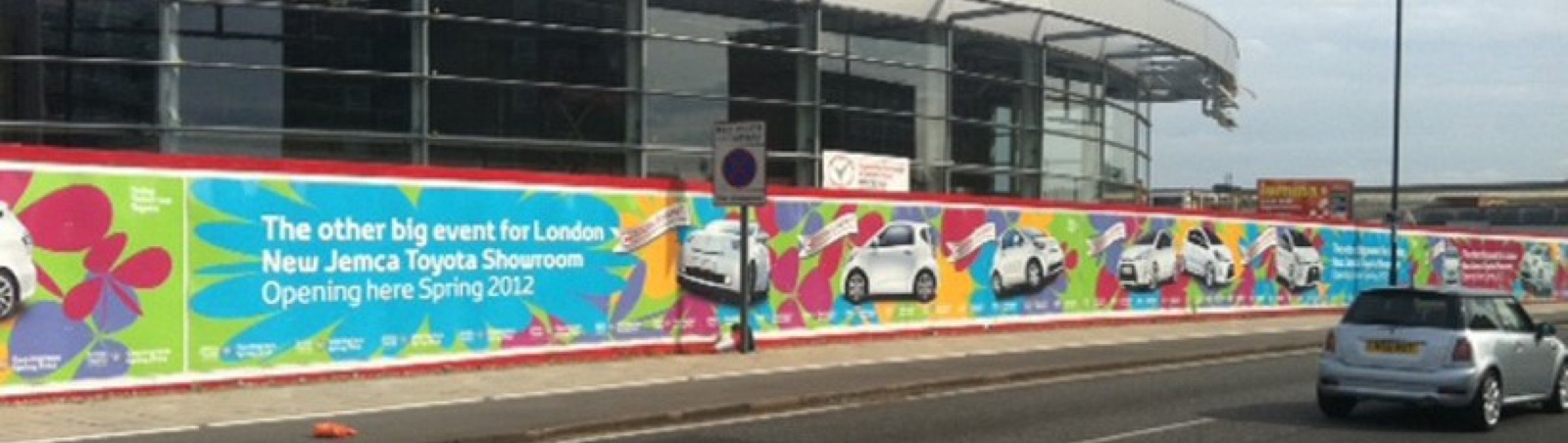
A hoarding is often the first thing the public sees of a new building, shop or scheme, and it can stay up for months. Left plain, it attracts flyposting and graffiti. Printed, it becomes a long, street-level billboard that tells people what is coming, who is building it and how to get in touch.
Three ways to print a hoarding
| Method | How it works | Best for |
|---|---|---|
| Self-adhesive vinyl | Printed vinyl applied directly to the painted hoarding boards | Clean, durable finish on smooth, sound boards |
| Blue-back poster paper | Printed paper pasted onto the surface, like a billboard poster | Shorter campaigns and messages that change |
| Mounted panels | Prints mounted on Dibond, Foamex or Correx and fixed to the hoarding | Rough or uneven boards, and panels you may want to move or reuse |
For all three, outdoor work is printed with UV-resistant inks and can be laminated against weather and scratches. Laminate also makes it easier to clean off graffiti.
Using the hoarding well
A hoarding is a long canvas, so it can do more than carry a logo. Many schemes use part of the run for a computer-generated view of the finished building, part for the key facts about the project, and part for practical information: the site contact, working hours and the number to call with a complaint. Neighbours read hoardings closely, and clear information there saves phone calls later.
Who uses hoarding graphics
- Developers and contractors marketing new homes or offices
- Retailers screening a shop during a refit
- Councils and public bodies explaining works to residents
- Venues and attractions closed for refurbishment
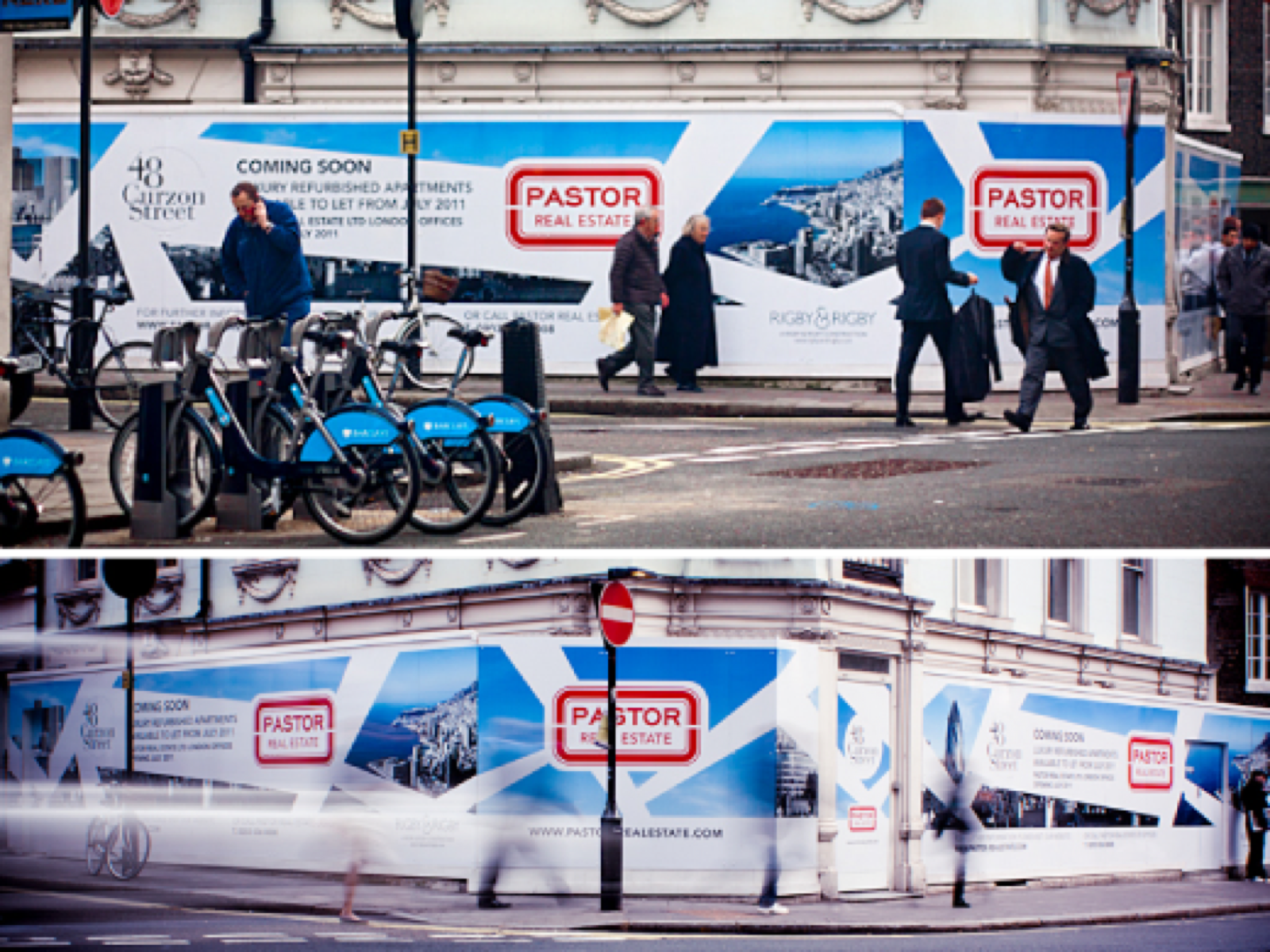
Planning the artwork
Hoardings are long and low, and people see them from a moving bus or a few steps away on the pavement. Design for both:
- Measure every run. Hoardings are rarely one neat rectangle. Send us elevations or measurements for each section, including gates and doors, and mark where those openings sit.
- Repeat the key message. On a long run, put the name and contact details more than once so that every passer-by catches them.
- Keep content above the kick zone. The bottom of a hoarding gets splashed and scuffed. Avoid placing small text or phone numbers there.
- Plan the panel joins. Graphics are produced in sections. Let us lay the joins so they do not cut through faces or wording.
If you have brand guidelines but no layout, our designers can produce the hoarding artwork and adapt it to each elevation.
Fitting
Our own team installs. Hoarding work usually involves site rules, inductions and access windows, so tell us the site contact and any requirements when you ask for a quote and we will plan the fit around them.
Get a price
Request a quote with the total length and height, the hoarding surface and how long the graphics need to last, or send your artwork if it is ready.
Questions
Which method lasts longest?
Mounted panels and laminated vinyl are the most durable. Blue-back paper is better suited to shorter campaigns. Tell us how long the hoarding will stand and we will recommend a method.
Can graphics go on an uneven or old hoarding?
Vinyl needs a smooth, sound, painted surface. On rough boards, mounted panels are usually the better option.
Can you replace one section if it is damaged?
Yes. We keep your files, so a damaged section can be reprinted to match.
Do you also print site boards and signs?
Yes. Rigid signs for site entrances and safety information are covered on our Dibond signs and signage pages.
Tell us what you need printed
Give us the size, the material and the date you need it. We will check your files and send a quote.
0203 026 0636