
Mounting and laminating
Turning a print into a finished piece: mounted on board, sealed against damage and fitted with the right fixings, all in our own workshop.

A print on its own is fragile. It curls, creases, marks and fades. Mounting gives it a rigid back; laminating or sealing gives it a protective face. Most of the large format work we produce goes through one or both before it leaves the workshop, and we do both in-house.
Mounting boards
| Board | Character | Typical use |
|---|---|---|
| Foamex | Light, rigid PVC foam, 1mm to 10mm | Signs, displays, exhibition panels |
| Polyboard | Very light foam-cored board | Short-term indoor displays and presentations |
| Dibond | Aluminium composite, flat and weather resistant | Long-term outdoor signs, premium interiors |
| MDF | Dense wood fibre board | Heavy-duty interior panels and fit-outs |
| Correx | Fluted, waterproof polypropylene | Temporary outdoor signs |
| Acrylic (Perspex) | Clear sheet, face-mounted | Photographs, retail windows, lightboxes |
For rigid work we can also print and mount onto wood, glass and metal.
Protecting the surface
Laminating applies a clear film over the print. It guards against scratches, fingermarks and moisture, and outdoors it adds protection against weather. We recommend it for Foamex prints and for anything that will be handled.
Sealing gives a protective coat. Posters and outdoor prints can be sealed against scratches and weather. For public spaces we also floor-seal graphics so they stand up to foot traffic.
Encapsulating seals the print between two layers of film, edge to edge, for items that will be handled heavily or exposed to splashes.
Fixings and edges
Finishing is about how the piece will be shown, too. Options include wrapped edges, Velcro, magnetic tape, eyelets, hanging bars and struts for freestanding boards.
A large example
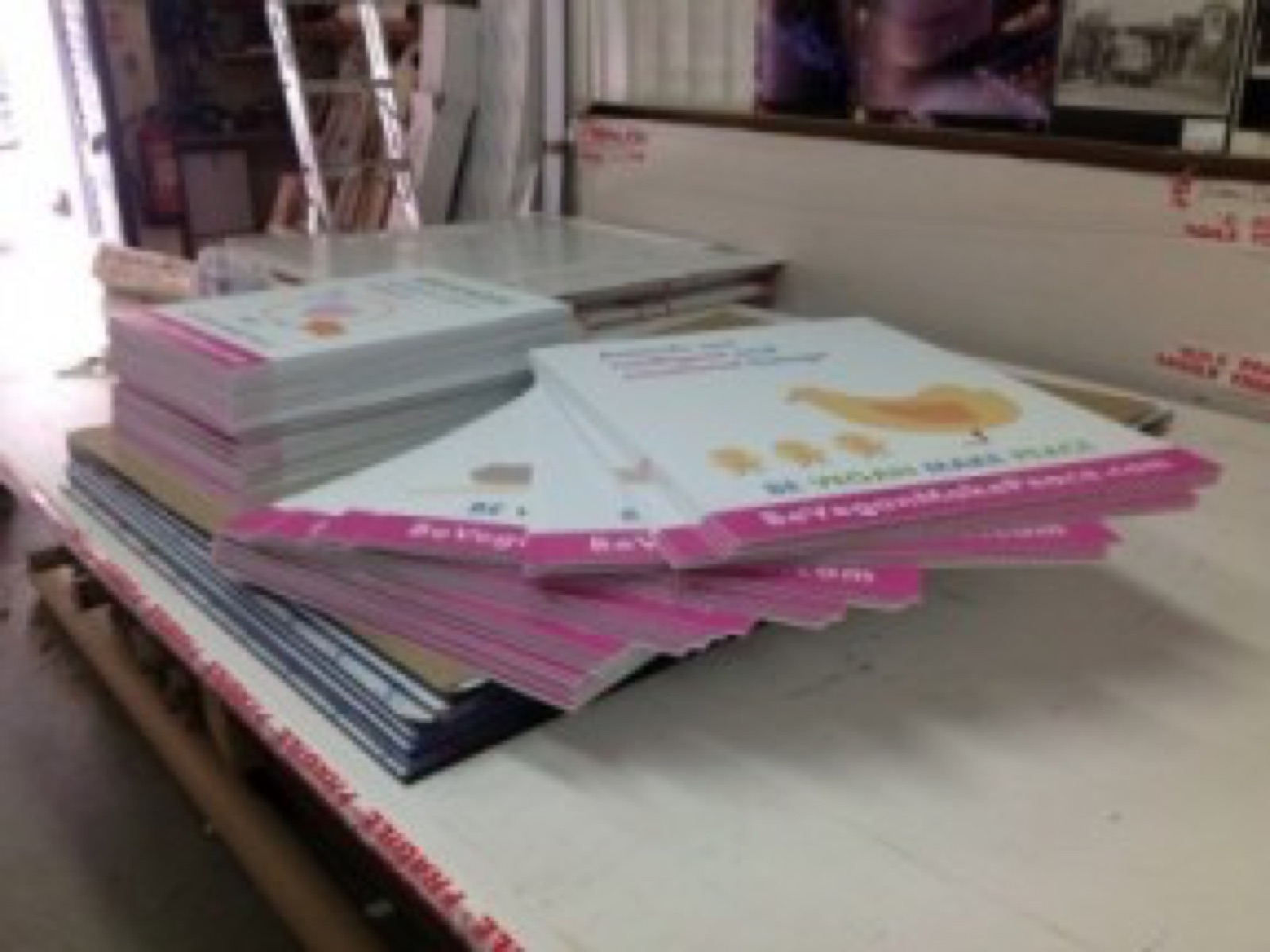
At the UCI Cinema in Huddersfield we produced thirty film images, up to ten metres wide, mounted, sealed and installed them. Work of that size in a public building has to be rigid, wipeable and secure, which is exactly what mounting and sealing are for.
Mounting a print you already have
If you have a print made elsewhere, ask us about mounting or laminating it. Tell us the size and the type of paper, as some papers and finishes need a different approach. Photographs and artwork you value should be discussed before mounting, as mounting is usually permanent.
Choosing a finish by location
- Behind glass or under spotlights: a matt laminate reduces reflections.
- Handled at events or in classrooms: laminate or encapsulate.
- Outdoors: UV inks with a laminate or seal, on a weather-resistant board.
- On the floor: a floor-sealed finish made for foot traffic.
Artwork tips if we are printing too
- Add bleed so the print can be trimmed flush with the board.
- Keep text clear of edges that will be wrapped or framed.
- Tell us the finish you want (matt, satin or gloss) as laminate changes the look.
Get a price
Tell us the size, the board and the finish, or describe how the piece will be used and we will suggest them. Request a quote or send artwork.
Questions
Is mounting reversible?
Generally, no. Mounting adhesives are designed to be permanent, so think carefully before mounting an original or irreplaceable print.
Matt or gloss laminate?
Matt cuts down reflections under lights and behind glass. Gloss gives stronger colour. Tell us where the piece will hang and we will suggest one.
Can you mount a print made elsewhere?
Ask us. Tell us the size and what it is printed on, and we will tell you whether it can be mounted and on what.
What is the difference between laminating and encapsulating?
Laminating protects the printed face. Encapsulating seals the whole print between two films, edge to edge, for heavier handling.
Tell us what you need printed
Give us the size, the material and the date you need it. We will check your files and send a quote.
0203 026 0636